
Everything About the G-Spot
The G-spot has been debated, dismissed, championed, and misunderstood for decades. Here's what the current science actually shows — and how to put it to use.
A brief history of a disputed idea
The G-spot takes its name from Ernst Gräfenberg, a German gynaecologist who described a particularly sensitive area on the anterior wall of the vagina in a 1950 paper. The name caught on; the research that followed was largely inconclusive. Studies couldn't agree on whether the structure existed, whether it was consistent across individuals, or how to reliably locate and stimulate it.
The confusion was substantially resolved once researchers began understanding the full anatomy of the clitoris. Helen O'Connell's dissection studies in the late 1990s and subsequent MRI research in the 2000s established that the clitoris is a much larger structure than its external appearance suggests, and that its internal portions — specifically the bulbs and crura — surround and press against the anterior vaginal wall. The G-spot, in current understanding, is not a discrete anatomical structure but a region where the internal clitoris can be stimulated through the vaginal wall.
Why some people seem to have one and others don't
The variation in individual experience — why this area is highly responsive for some people and barely noticeable for others — is likely explained by anatomical variation in the size and position of the internal clitoris, and by variation in the distance between the clitoral structure and the vaginal wall. In some people the contact is close and direct; in others there's more tissue between them. Neither is a deficiency.
Arousal level matters significantly. The internal clitoral structure engorgement during arousal, bringing it closer to the vaginal wall and making it more accessible to stimulation. G-spot exploration is almost always more productive when arousal is already well established — attempting it from a cold start is likely to produce undifferentiated sensation rather than anything particularly notable.
Locating and stimulating it
The area is found on the anterior (front, toward the navel) wall of the vagina, typically around 5–7 cm inside, though this varies. The tissue in this area is often slightly ridged or textured compared to the smoother walls of the vaginal canal — when aroused, this texture becomes more pronounced and the area may feel slightly spongy.
The classic guidance is to use a 'come here' motion with a finger or two — curved upward, applying firm pressure to the anterior wall and drawing forward. The pressure required is typically more than most people initially apply. The sensation is often different from clitoral stimulation: less immediately sharp, more diffuse, sometimes accompanied initially by the sensation of needing to urinate (which tends to resolve quickly as the body adjusts and is unrelated to any actual urgency).
Curved vibrators and internal massagers designed with this anatomy in mind produce a significantly different experience from straight toys, because they can maintain consistent pressure on the anterior wall throughout use. The combination of internal G-spot stimulation and simultaneous clitoral stimulation is the mechanism behind blended orgasm — reported by many women as qualitatively different from either external or internal stimulation alone.
Squirting: what it is and what it isn't
Female ejaculation — the expulsion of fluid during or at orgasm — is often associated with G-spot stimulation and has been subject to an extraordinary amount of scientific and cultural controversy. A 2015 study published in the Journal of Sexual Medicine examined the fluid in detail: it found that the majority of the expelled volume in cases of substantial fluid release came from the bladder, though it was diluted and differed in composition from ordinary urine. A smaller amount of fluid is produced by the Skene's glands, sometimes described as the female prostate, which may be the 'true' female ejaculate.
The practical implication: squirting is a physiological response that appears to be possible for a much larger proportion of people with vulvas than actually experience it, partly because significant arousal and specific stimulation are required, and partly because the initial sensation — similar to urgency to urinate — leads many people to stop before it occurs. Whether squirting happens has no direct bearing on whether G-spot stimulation is pleasurable or whether orgasm is achieved.
Setting appropriate expectations
G-spot exploration is worth approaching with curiosity rather than as a goal to be achieved. For people whose anatomy makes it highly accessible, sustained G-spot stimulation can be among the most intensely pleasurable experiences available. For others, the sensation is noticeable but not particularly remarkable. Both are within the normal range.
The G-spot became culturally loaded with the weight of performance — something you were supposed to have, something partners were supposed to find and deploy. Stripping that off and approaching it simply as an area of potential sensitivity worth exploring is a more useful frame. You may find something interesting. You may find it less remarkable than you expected. The exploration itself is the point.
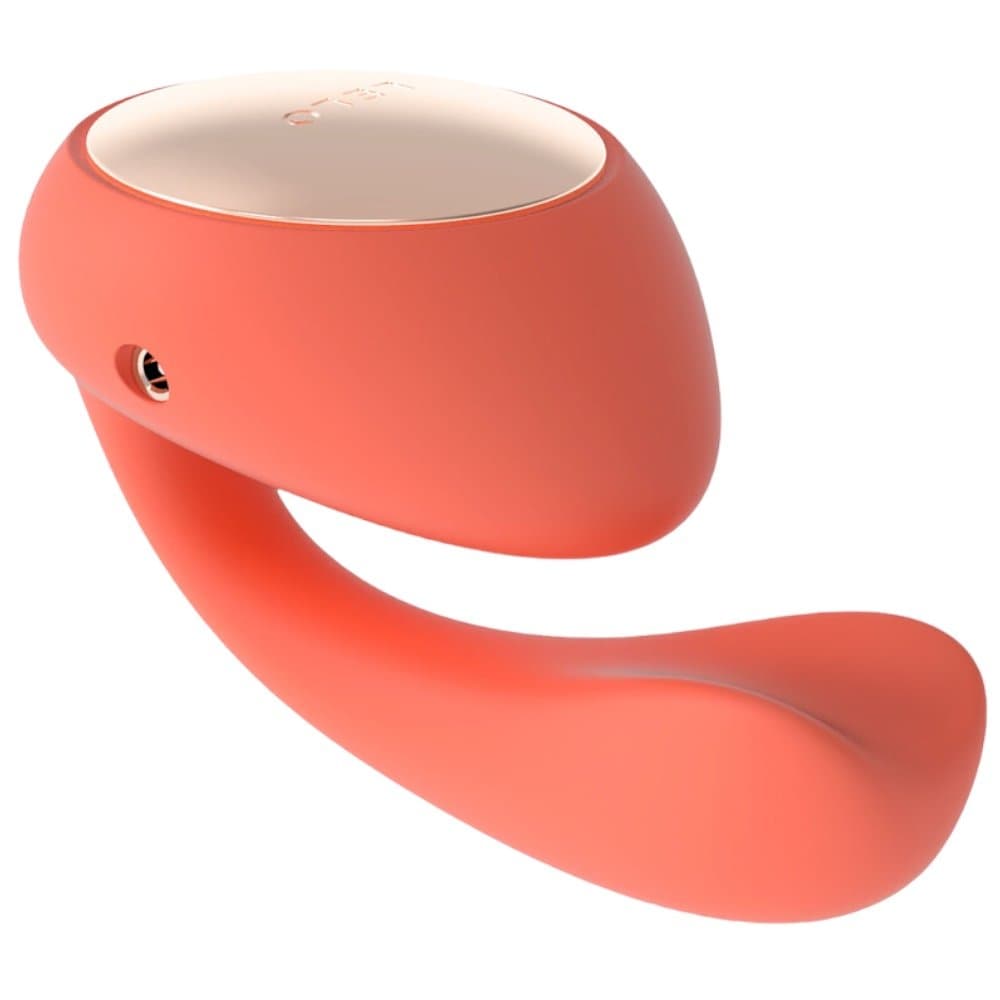
Our pick
LELO
LELO Ida Wave Peach