
How and Why to Massage Your Prostate
The prostate is one of the most reliably pleasurable areas of the body for those who have one. It's also one of the most consistently underexplored, for reasons that are mostly cultural.
What the prostate is
The prostate is a gland approximately the size of a walnut, located just below the bladder in people assigned male at birth. It surrounds part of the urethra and produces seminal fluid. During orgasm, the prostate contracts rhythmically as part of the muscular sequence of ejaculation — a physiological involvement that makes it directly relevant to sexual experience, not merely to medical health.
The prostate has a high concentration of nerve endings. Direct stimulation of it produces a sensation that is quite different from penile stimulation alone — typically described as deeper, more diffuse, and capable of producing a more expansive type of orgasm. It can be accessed externally (through the perineum, the area between the scrotum and anus) or internally (through the rectum, where it can be felt on the anterior wall, pointing toward the navel, around 5–7 cm inside).
The cultural silence
Despite being one of the most physically accessible pleasure points in the male anatomy, prostate stimulation is rarely discussed outside of medical contexts, largely because internal access requires anal insertion — and anal activity in men carries strong cultural stigma in most Western societies. The association with gay male sexuality, however inaccurate as a limitation, has led many heterosexual men to treat their own anatomy as off-limits.
There is no logical basis for this. The prostate has the nerve endings it has regardless of sexual orientation. A man who enjoys prostate stimulation has no more made a statement about his sexuality than a woman who enjoys vaginal penetration has made a statement about hers. Anatomy is not identity.
Health and the prostate
There is a body of evidence, though not yet conclusive, linking regular ejaculation to reduced risk of prostate cancer. A 2016 study published in European Urology — one of the largest to date on this question — found that men who ejaculated 21 or more times per month had a significantly lower risk of prostate cancer than those who ejaculated less frequently. The mechanism is thought to involve the clearance of prostate secretions that might otherwise become carcinogenic over time.
Prostate massage has also been used clinically as a supportive treatment for chronic prostatitis (inflammation of the prostate) — a condition affecting a significant proportion of men at some point in their lives. While it shouldn't be used to self-treat without medical guidance, it points to the prostate as an area that benefits from regular attention.
External and internal stimulation
External prostate stimulation — via the perineum — is the lower-intensity starting point. The prostate can be felt through this area, and sustained firm pressure during arousal can produce noticeable sensation. It's accessible without any insertion and serves as a good introduction to prostate awareness.
Internal stimulation requires adequate preparation: the anal area has no self-lubrication, so a generous application of a thick lubricant (silicone-based is particularly effective for anal play as it maintains glide longer) is essential. Start with a single well-lubricated finger, move slowly, and allow the muscles to relax — there should be no significant discomfort. The prostate can be felt as a rounded, slightly raised area on the anterior wall.
Prostate-specific massagers are designed to curve to the correct angle for sustained, hands-free stimulation. They are a significant improvement over improvised approaches for anyone wishing to explore this area in depth, as they allow simultaneous penile stimulation while maintaining consistent prostate contact.
What to expect
Prostate orgasm, when it occurs, tends to feel different from typical penile orgasm — less localised, often more sustained, and for many people accompanied by a more pronounced sense of full-body release. It may take several sessions of exploration before it becomes reliably accessible. The prostate tends to become more responsive as arousal increases, so it's worth incorporating prostate stimulation mid-session rather than as a standalone approach from a cold start.
Prostate stimulation during or just before orgasm tends to intensify the experience. Many people find that prostate massage during masturbation produces notably more intense orgasms than without — not for everyone, and not necessarily every time, but enough that it warrants genuine exploration by anyone with a prostate who hasn't tried it.
The barrier is almost entirely cultural. The anatomy, and the pleasure it enables, have been there all along.
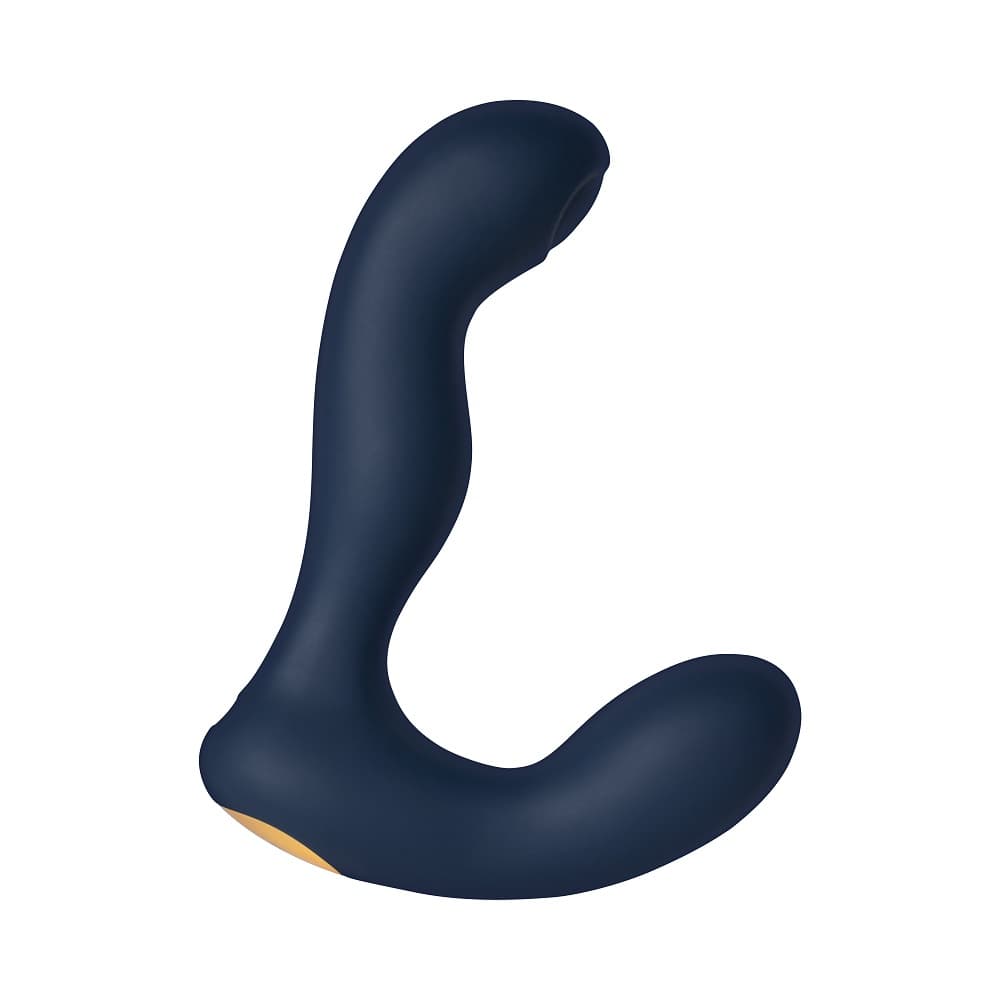
Our pick
Svakom
Svakom Iker Neo Prostate Massager