Best Lube and Vaginal Moisturiser for Menopause (UK)
Lube, vaginal moisturiser or vaginal oestrogen? What each does, what to look for on the label, and what to ask your GP or pharmacist.
By the Serious Pleasure team, with first-hand notes from a team member going through menopause. Last reviewed: 28 October 2026.
If sex has started to hurt, or everything feels dry, sore or tight in a way it didn't before, you're not imagining it, and you're far from the only one. The NHS lists dryness, burning, irritation and itching in and around the vagina as symptoms of perimenopause and menopause, and says they can make sex painful (NHS). The RCOG counts vaginal dryness among the most common symptoms of the menopause transition (RCOG).
Plenty of things help, and the choice gets a lot easier once you know that lubricants, vaginal moisturisers and vaginal oestrogen do three different jobs. Below we cover how they differ, what to look for on a label, how lubes behave with condoms and toys, and what we do and don't sell. We're a UK retailer, not a clinic, so for the medical side we've leaned on the NHS, NICE and the British Menopause Society, and linked to them so you can read it for yourself.
The short answer
- Lubricant: for the moment of sex, to cut friction and discomfort. Water-based is the easy default, especially with condoms and silicone toys.
- Vaginal moisturiser: for regular use, whether or not you're having sex, to keep things comfortable day to day. If dryness is there all the time, this is the one to look at.
- Vaginal oestrogen: a treatment, mostly on prescription, that works on the cause of menopausal dryness right where it happens. Worth asking your GP about if dryness is persistent. You can use it alongside the other two.
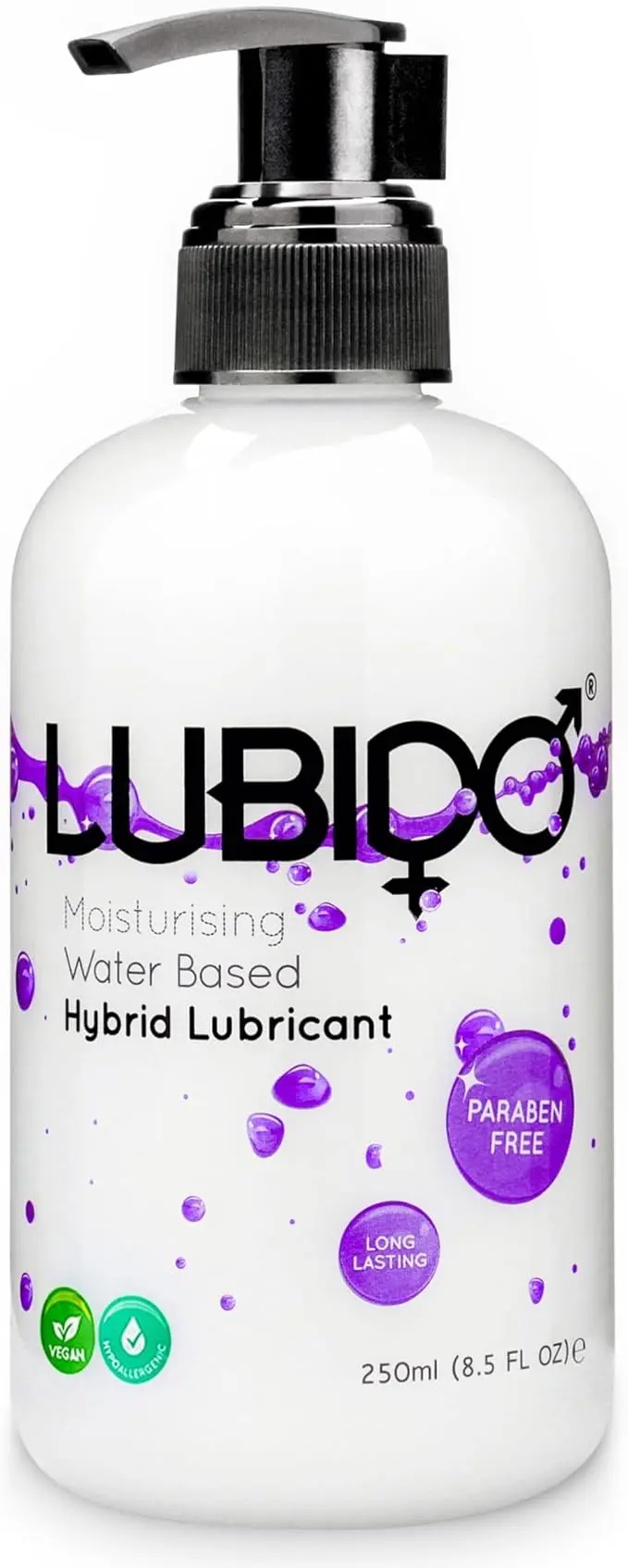
- What we sell: one lubricant that fits this brief, the Lubido Hybrid Moisturising Lubricant.
See your GP if…
- Sex is painful, or the pain is there at other times too
- You have bleeding after sex, between periods, or any vaginal bleeding after your periods have stopped for 12 months
- Dryness has lasted a few weeks and what you've tried isn't helping, or it's affecting your daily life
- You have unusual discharge, or keep getting UTIs or UTI-like symptoms
- You notice mood changes, low mood or anxiety alongside other symptoms
This is based on the NHS pages on vaginal dryness and menopause symptoms. The NHS says postmenopausal bleeding needs checking even if it happens once or is only spotting.
Why menopause makes you drier
Oestrogen keeps the vagina healthy and works as a natural lubricant. As levels fall during perimenopause and menopause, the tissue lining the vagina, vulva and urinary tract gets thinner and drier (The Menopause Charity). It can feel sore, itchy or inflamed, and sex can be uncomfortable because the tissue is less flexible and doesn't stretch as easily.
The British Menopause Society calls this whole cluster of changes genitourinary syndrome of menopause (GSM) and describes it as chronic and progressive, which is a good reason not to just put up with it (BMS consensus statement). It can start in the early years of perimenopause, or not turn up until years after your periods stop, and the NHS notes it can carry on after menopause (NHS).
Menopause isn't the only possible cause. The NHS also lists some medicines (hormonal contraceptives and antidepressants among them), hysterectomy, cancer treatments, conditions such as diabetes and Sjögren's syndrome, perfumed soaps and washes, and not being aroused enough during sex (NHS). If you're not sure what's behind it, talk to your GP.
Lube, moisturiser or oestrogen: what's the difference?
| Feature | Lubricant | Vaginal moisturiser | Vaginal oestrogen |
|---|---|---|---|
| What it's for | Cutting friction and discomfort during sex | Day-to-day comfort, whether or not you have sex | Treating the hormonal cause of the dryness in the tissue |
| How often | Each time you have sex (BMS) | Every two to three days (The Menopause Charity), or at least twice a week (BMS) | As prescribed: a tablet, pessary, cream, gel or ring (NHS, NICE) |
| Where you get it | Many are over the counter, some on prescription (BMS) | Pharmacy, or prescribed (RCOG) | Prescription, except Gina tablets and Ovesse cream, which you can buy from a pharmacy (NHS) |
| How long it takes | You feel it straight away | About three months of regular use (The Menopause Charity) | Up to three months to work fully (NHS) |
| Can you combine it? | Yes | Yes | Yes. NICE says it can be used alone or with non-hormonal moisturisers or lubricants |
Where vaginal oestrogen fits
We sell lubricants, not medicine, so for persistent dryness our advice is simple: ask your GP about vaginal oestrogen. This is what the official sources say.
NICE recommends offering it for genitourinary symptoms of menopause, including to people already on HRT, and says it comes as a cream, gel, tablet, pessary or ring, chosen with you (recommendations 1.5.5 and 1.5.7). Serious side effects are very rare, only a minimal amount reaches the bloodstream compared with HRT, and symptoms often come back when you stop (1.5.6). The NHS adds that you don't need to take a progestogen with it, and that early side effects such as headache, abdominal or vaginal pain, or bleeding normally settle within the first few months.
If you can't use it or would rather not, NICE says to consider non-hormonal moisturisers or lubricants (1.5.9). If you've had breast cancer, NICE says to offer those first (1.5.14) and to consider vaginal oestrogen if symptoms carry on (1.5.15), which is a decision for you and your specialist team.
It isn't either/or. Plenty of people use a lubricant for sex on top of whatever treatment they're on.
Types of lube: water, silicone, oil and hybrid
| Type | Good for | Watch out for |
|---|---|---|
| Water-based | The default. The NHS suggests water-based lubricants for vaginal dryness, and The Menopause Charity says they won't dissolve latex condoms. It's also the usual pairing for silicone toys. | Some people find they need topping up more often (see our team member's notes below). |
| Silicone-based | The BMS lists it as an option. WHO describes silicone fluids as inert and safe, with minimal effect on latex condoms. | LELO warns that silicone lubricants may make its silicone toys permanently tacky (more below). |
| Oil-based | The BMS lists it as an option and mentions that some people mix water- and oil-based lubes for a "double glide". | The NHS says not to use oil-based lube with latex condoms, and the BMS notes it can weaken them. |
| Hybrid (water and silicone) | A middle route: a water-based formula with silicone added. | It contains silicone, so the toy advice below applies. |
The NHS and The Menopause Charity point to water-based lubes, while the BMS says it comes down to personal preference. Water-based is the safe place to start, and the others come with trade-offs.
Ingredients: what to look for and what to be careful with
There's no short list of "approved" ingredients from a UK health body, so we can't give you one. Here's what the sources do say.
pH and osmolality. Osmolality is, roughly, how concentrated a product is compared with your own secretions. The BMS says lubricants and moisturisers should have a pH and osmolality similar to natural vaginal secretions, to protect the vaginal microbiome. WHO puts numbers on it: a healthy vagina is normally pH 3.8 to 4.5, and normal secretions are 260 to 290 mOsm/kg. WHO says a personal lubricant ideally shouldn't go above 380 mOsm/kg, but most commercial ones are far higher (2,000 to 6,000), and it suggests 1,200 as an interim limit.
One caveat: the WHO note was written about lubricants used with condoms in public-health programmes, not about menopause. It's still the clearest primary source on osmolality, and the BMS points the same way. Most brands don't print pH or osmolality on the pack, so check their website or ask them.
Glycerin and propylene glycol. WHO says these glycols are commonly added to water-based lubes to keep them moist, and that the amount of glycol is the main thing that sets osmolality. Warming lubes often contain a lot of propylene glycol. Neither ingredient is bad in itself. The amount matters, and an ingredients list doesn't show it. If a product has irritated you, tell your pharmacist or GP.
Preservatives, including parabens. WHO says water-based lubricants have to contain preservatives, and that these can cause irritation or sensitisation in some people, parabens being the most common. "Paraben-free" suits some people, but it doesn't mean preservative-free, and any preservative can irritate someone.
Fragrance, flavours and warming or tingling effects. The NHS advises against perfumed soaps, washes and douches in and around the vagina. WHO says the safety of lubricants with herbal, warming or tingling ingredients hasn't been properly assessed in high-risk groups and doesn't recommend them for bulk procurement. We couldn't find a UK source on fragrance in lubes specifically, so this part is our reading of the NHS advice: if your skin is sensitive, plain and unscented is the simple choice.
Check it's made for the vagina. The NHS says not to use creams, lotions or moisturisers that aren't made for it, as they can cause irritation or infection. WHO's list of household products that damage latex includes body and hand lotions and cooking oils.
A quick label check
- Made for vaginal or intimate use
- Says whether it's water-, silicone-, oil-based or a hybrid (it matters for condoms and toys)
- Fragrance-free, if you're prone to irritation
- Shows its full ingredients, and ideally pH and osmolality
- Says it's condom compatible, if you use condoms
Condoms and sex toys
Condoms. The NHS says not to use oil-based lube with latex condoms: choose water-based or silicone-based. The Menopause Charity advises water-based if condoms are your contraception. And pregnancy is still possible in perimenopause. The NHS says to keep using contraception for a year after your last period if you're 50 or over, and for two years if you're 40 to 49 (NHS).
Silicone toys and silicone lube. LELO's Sona manual warns that hand creams or silicone-based lubricants may leave the toy's silicone permanently tacky. We read the Sona manual for this guide, and the same sentence turned up in search results for several other LELO manuals, so we'd treat it as the working rule for silicone toys. Other brands may word it differently, so check your own toy's manual. In practice:
- With a silicone toy, use a water-based lube.
- A hybrid lube contains silicone, so check first. Lubido says all its lubricants are sex toy and condom compatible, but advises a discreet patch test on your silicone toy before using the Hybrid fully. LELO is stricter and warns against silicone lubricants, and where the two disagree we'd go with the toy maker. We'd keep the hybrid for fingers, hands and bodies, and use plain water-based lube with a toy. If you want to try them together, test a small, hidden spot first and read your toy's manual.
The BMS also lists regular sexual activity as something that helps: it improves blood supply to the vaginal tissue and gently stretches it, which helps keep it elastic. If you're thinking about toys, our beginner's guide to choosing a vibrator is a gentle place to start.
How to use lubricant and moisturiser
- Lubricant goes on at the time of sex. The NHS says to put it in and around the vagina, on your partner's penis or fingers, or on a toy.
- Moisturiser goes in regularly. The NHS says you can put vaginal moisturisers inside the vagina to keep it moist. The Menopause Charity suggests every two or three days and the BMS says at least twice a week, whether or not you have sex. Follow the instructions on the product.
- Give it time. The Menopause Charity says symptoms should improve after about three months of moisturiser or vaginal oestrogen. If they don't, see your doctor, as these symptoms sometimes have other causes.
- Keep everything else gentle. Use unperfumed soap and washes around the vagina and skip douches (NHS). The NHS also suggests trying different kinds of foreplay to find what helps you feel aroused.
- If something stings or burns, stop and try a different product. If the irritation doesn't go, speak to a pharmacist or GP.
A team member's notes: Lubido Hybrid Moisturising Lubricant
First-hand notes from a team member going through menopause, in her own words. This is one person's experience, not clinical advice.
What I thought of Lubido Hybrid Moisturising Lubricant
This is the one we keep re-buying. It comes out as a thick, white, creamy gel rather than a clear runny liquid, and it feels smooth and a bit rich on the skin.
The thing I notice most is that it isn't sticky. Water-based lubes I've used before went tacky after about ten minutes and I'd end up reapplying. With this, a small amount lasts up to an hour for me, and it just soaks in rather than going gummy.
It doesn't sting or burn, and there's no smell at all. It washes off with warm water and a little mild soap.
I only use it during sex, not as an everyday moisturiser, but I do notice the moisturising side of it: it leaves things feeling soft and comfortable afterwards.
What I'd watch for: it contains silicone, so check it against your toys (see the toy section above). It's a bit harder to clean up than a regular water-based lube, and it can leave a slightly oily stain on sheets if you're not careful.
Verdict: It's a pleasure to use, and you don't need as much.
What's in it
The ingredients, from the manufacturer's listing: Aqua, Glycerin, Propylene Glycol, Dimethiconol, Dimethicone, Hydroxyethylcellulose, Isopropyl Myristate, Glyceryl Stearate, 1,2-Hexanediol, Hydroxyacetophenone, Caprylic/Capric Triglyceride, Ceteareth-20, Cetearyl Alcohol, Sodium Hyaluronate, Disodium EDTA.
A few things worth knowing:
- It's water-based with silicone (dimethicone and dimethiconol), which is why it's called a hybrid.
- It contains glycerin and propylene glycol. We couldn't find a published pH or osmolality figure, so we can't say where it sits against the WHO and BMS numbers.
- No parabens are on the list, and Lubido describes it as paraben-free. As above, that doesn't mean preservative-free.
- It contains sodium hyaluronate (hyaluronic acid). That isn't a treatment for the hormonal cause of menopausal dryness, and we're not suggesting it is. See the vaginal oestrogen section.
- It contains oils and esters (isopropyl myristate, caprylic/capric triglyceride). Lubido says "all of our lubricants are sex toy and condom compatible" and describes the Hybrid as "compatible with condoms and many personal wellness accessories", with a patch-test footnote for silicone toys. Our product page says "condom safe". That's the manufacturer's claim, not something we've tested.
- It's sold as a lubricant for sex, whatever "moisturising" in the name suggests. We've seen nothing to say it's meant as a regular-use vaginal moisturiser in the NHS and BMS sense, so don't treat it as a substitute for one.
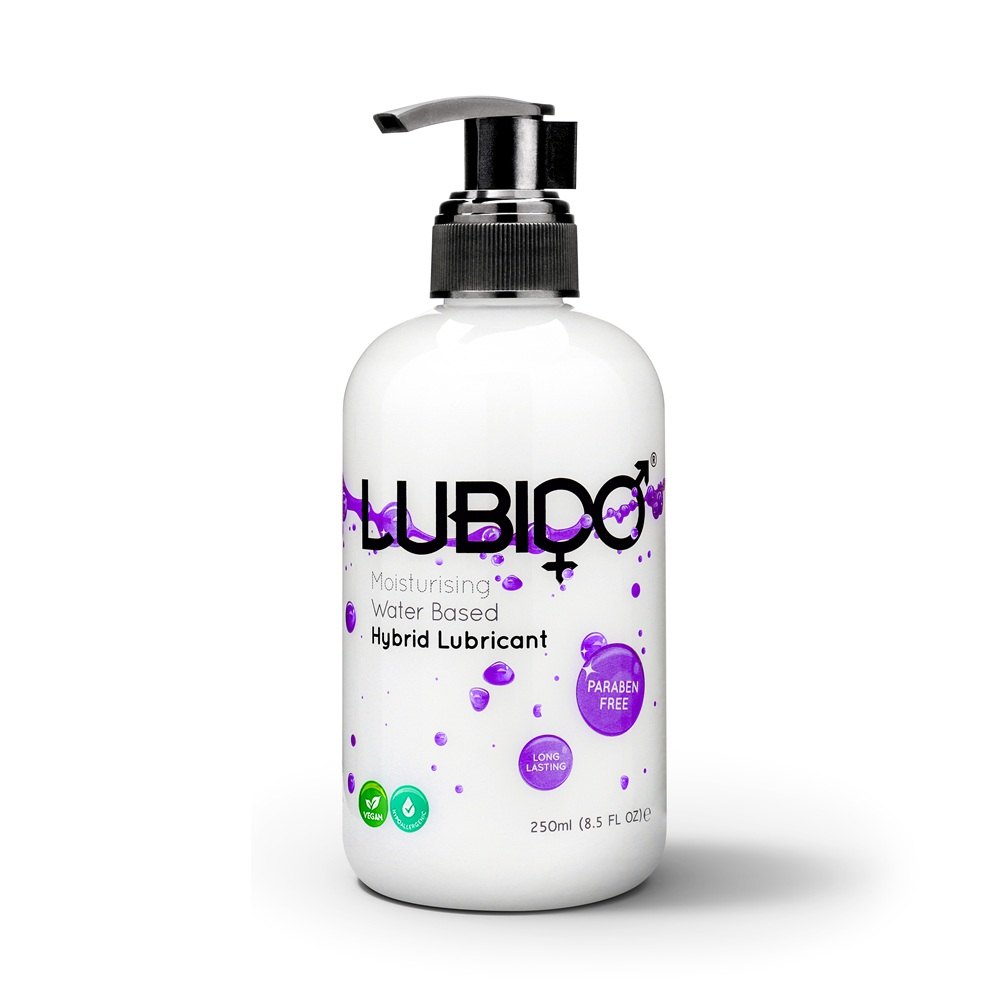
Our pick
Lubido
Lubido Hybrid Moisturising Lubricant
What we don't sell: vaginal moisturisers
We don't stock a vaginal moisturiser and haven't tested one, so we won't call anything "the best". Here's where to look instead.
- Your pharmacist. The NHS says you can get most self-help products for vaginal dryness without a prescription, and the RCOG says moisturisers and lubricants can be bought at a pharmacy or prescribed.
- Your GP, if the dryness is persistent. Some products are available on prescription (RCOG, BMS).
- Brands named by The Menopause Charity. This is information, not our recommendation. Its page names YES VM, Sylk Intimate and Regelle as recommended moisturiser brands. It was last updated in October 2022, so check with a pharmacist that they're still available and suit you.
- What "best" should mean: made for vaginal use, with a pH and osmolality close to your natural secretions (BMS), unperfumed if you're sensitive, and something you'll actually use regularly. The Menopause Charity says to give it about three months.
Next steps
If dryness is one part of a bigger change in how sex feels, self-pleasure in menopause is a good companion read.
FAQ
What is the best lube for menopause in the UK?
There isn't one best lube, and we don't rank products we haven't tested. What the sources agree on: use lube at the time of sex, start with water-based (NHS, The Menopause Charity), especially if you use latex condoms or silicone toys, and look for a pH and osmolality close to your natural secretions (BMS). We stock one lube that fits this topic, the Lubido Hybrid Moisturising Lubricant, and no moisturisers.
What's the difference between a lube and a vaginal moisturiser?
Lube is for the moment of sex. A moisturiser is for regular use whether or not you have sex: every two to three days (The Menopause Charity) or at least twice a week (BMS). Neither treats the hormonal cause of dryness. Vaginal oestrogen does.
What is the best vaginal moisturiser?
We don't sell one and haven't tested any, so we can't pick a winner. Look for one made for vaginal use, with a pH and osmolality close to your natural secretions, unperfumed if you're sensitive, and use it regularly for about three months before judging it. Your pharmacist can help you choose, and the section above lists the brands The Menopause Charity names.
What can I use for menopause dryness that's there all the time?
Lube is only for sex, so constant dryness usually needs more. The NHS suggests vaginal moisturisers and says to see a GP if dryness has lasted a few weeks and self-help isn't working. NICE recommends offering vaginal oestrogen.
Can I use a moisturiser, a lube and vaginal oestrogen together?
Yes. NICE says vaginal oestrogen can be used alone or with non-hormonal moisturisers or lubricants, the RCOG says the same, and the BMS says lubricants and moisturisers can be used alongside it.
Can I use silicone lube with silicone sex toys?
Generally not. LELO warns that silicone lubricants may make its silicone toys permanently tacky, so use a water-based lube and check your toy's manual. Lubido says its Hybrid is toy compatible but advises a patch test on silicone toys first.
Which lube is safe with condoms?
The NHS says not to use oil-based lube with latex condoms. Water-based or silicone-based are fine. Check the pack says it's condom compatible.
Sources
All sources were opened and read for this draft on 28 October 2026.
- NHS, Vaginal dryness (last reviewed 24 July 2025).
- NHS, Symptoms of menopause and perimenopause.
- NHS, About vaginal oestrogen (last reviewed 27 January 2023; next review was due January 2026).
- NHS, Condoms.
- NICE, Menopause: identification and management (NG23), recommendations 1.5.5 to 1.5.9 and 1.5.14.
- British Menopause Society, Consensus statement: Genitourinary Syndrome of Menopause (GSM) (November 2025).
- The Menopause Charity, Vaginal dryness (last updated October 2022).
- RCOG, Treatment for symptoms of the menopause (updated May 2026).
- World Health Organization, UNFPA and FHI360, Use and procurement of additional lubricants for male and female condoms: advisory note (2012). Written for condom-lubricant procurement, not menopause.
- LELO, Sona user manual.
- Lubido, Hybrid product page (ingredients and compatibility statement).
About this guide
Written by the Serious Pleasure team, with first-hand notes from a team member going through menopause. We are a UK retailer, not a medical service, and this guide hasn't been clinically reviewed; the sources above are there so you can read them yourself. Last reviewed 28 October 2026.
Disclaimer: This article is general information, not medical advice. It doesn't replace advice from your GP, pharmacist or a menopause specialist. If you have pain, bleeding, persistent dryness or mood changes, please speak to a healthcare professional. Products named as examples are not endorsements, and we haven't tested them.
Related products
Keep reading
- GuidesEverything About the G-SpotThe G-spot has been debated, dismissed, championed, and misunderstood for decades. Here's what the current science actually shows — and how to put it to use.
- GuidesHow and Why to Massage Your ProstateThe prostate is one of the most reliably pleasurable areas of the body for those who have one. It's also one of the most consistently underexplored, for reasons that are mostly cultural.
- GuidesThe Language of Sex and Pleasure: A Vocabulary for IntimacyHow we talk about sex shapes how we experience it. The vocabulary we choose — clinical, euphemistic, or direct — carries more weight than most people realise.